



Content Loading...
Physician-scientist tailors treatment to patient goals
A Guided Tour of

Inflammation in Myelofibrosis

with Angela Fleischman, MD, PhD University of California Irvine

SCROLL
PART ONE

Exploring the depthsof a rare disease

“There is a difference between what we know on the surface and what’s going on underneath.”

Imagine if we only knew the ocean by its waves, missing all that lingers beneath. How could we possibly know the vastness of the sea by simply perceiving it from the surface? We must dive in and explore the depths. “We must go and see for ourselves,” said Jacques Cousteau, famed oceanic explorer.

Physician-scientist Angela Fleischman follows a similar motto in her work exploring myeloproliferative neoplasms (MPNs). “There is a difference between what we know on the surface and what’s going on underneath,” she says. Mitigating symptoms, reducing spleen volume, and managing through both disease and therapy-related cytopenias, have risen to the top as key components in the care of patients with myelofibrosis (MF). But Dr Fleischman says just focusing on these factors undermines the complexity of the disease and the root of its pathogenesis.

Dr Fleischman discusses the need to dive deeper and discover the “why” of myelofibrosis.
The vast influence of inflammation in MF
SCROLL
“Like water is to the ocean, inflamation is involved in every part of MF,”
- ANGELA FLEISCHMAN, MD, PHD
BACK TO STORY
“Like water is to the ocean, inflammation is involved in every part of MF.”
SCROLL
PART TWO

The many pathways
to inflammation in MF

“Ideally, we need to target multiple pathways.”

All paths of MF lead to inflammation, says Dr Fleischman, and she is committed to exploring the many detours the imbalanced immune system takes in the disease. What is known about the inflammatory milieu in patients with MF is their pro-inflammatory signals become more aggressive and anti-inflammatory responses begin to malfunction. In essence, inflammation strengthens in MF as stopgaps fail, contributing to the complex, heterogeneous phenotype of the disease.

Key inflammatory cytokines, such as TNF-α, IL-1, and IL-6, and the JAK-STAT inflammatory pathway play roles in the pathophysiology of MF. But according to Dr Fleischman, they are just a drop in the bucket.

“The problem goes well beyond individual cytokines and a single JAK pathway. Inflammation requires a whole compilation of cytokines working together, and multiple pathways are engaged. If you only target one, other compensatory pathways could upregulate.”

INFOGRAPHIC
More than one pathway to MF
JAK:STATTLR/IL1R-IRaK1RhoA-ROCK
SCROLL
PART THREE

Traveling between worlds as a physician-scientist

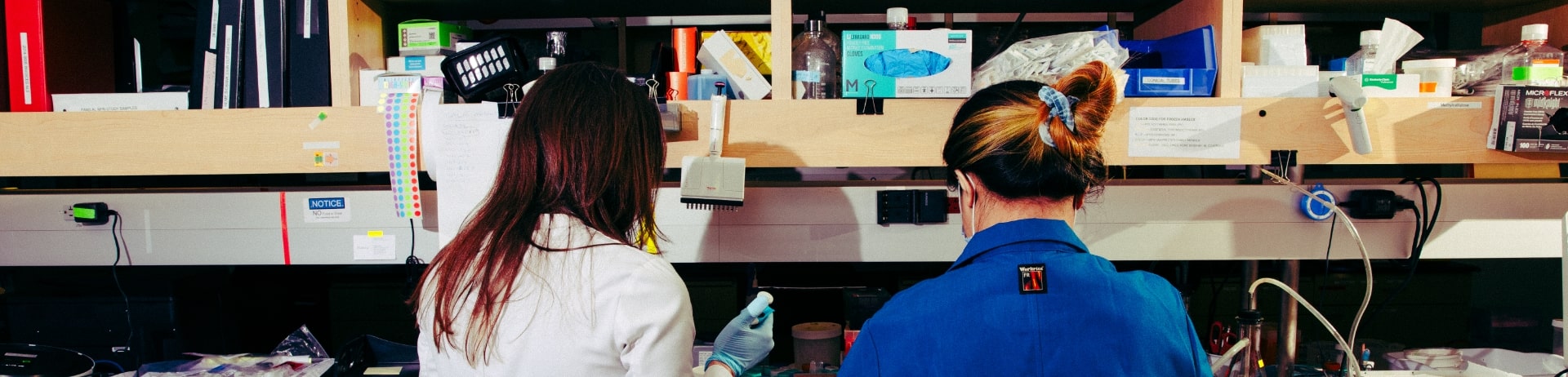
From bench to bedside and back again, Dr Fleischman traverses disciplines searching for the source of chronic inflammation in MF. On Mondays, she sees patients in the clinic; the rest of the week, she conducts preclinical studies in her lab— The Fleischman Lab at UC Irvine.

Navigating these distinct fields helps her see the bigger picture, she says. “Because I’m the same person working on both ends of the spectrum, I can see tiny details and entertain curiosities between the two.”

Patients offer her deep insight into the disease, says Dr Fleischman. In the clinic, she’s able to see how MPNs progress firsthand. And while she relies on lab reports, bone marrow biopsies, and spleen size to inform her conversations with patients, she digs deeper to pair the individual’s physiology with their philosophy on managing their disease.

“It’s important to identify, in the patient’s mind, what they want from their treatment.”
VIDEO
Physiology & Philosophy
One of Dr Fleischman’s patients describes his philosophical approach to MF.
The vast influence of inflammation in MF
SCROLL
“Like water is to the ocean, inflamation is involved in every part of MF,”
- ANGELA FLEISCHMAN, MD, PHD
BACK TO STORY
“Hopefully sometime during my lifetime things will all fall into place.”

In turn, Fleischman uses the outcomes from her laboratory studies as a north star to guide the development of patient studies in the clinic. In essence, her work encompasses a cooperative input/output system that helps identify common threads in inflammation and MF that wouldn’t otherwise connect.

And she wouldn’t have it any other way. “You know, research is not just some people working in a lab. Research involves people with MPNs and researchers working together towards a common goal.” All the little pieces of knowledge are coming together, she says, to further understand the depths of the disease.

“I know more about MPNs than I did a year ago, a lot more than I did 5 years ago, and hopefully 5 years from now, I’ll understand more than I do today.”

Dr Fleischman adds, “Hopefully sometime during my lifetime things will all fall into place.”